24.09.2026
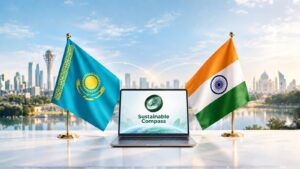
Sustainable Compass Enters the Indian Market
18.09.2026
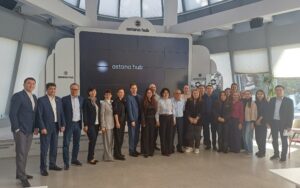
Strategic Agenda for IT Business Development Discussed in Astana
10.09.2026
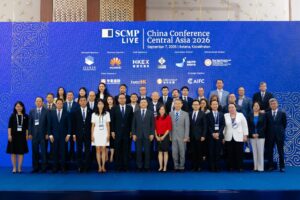
GPI at China Conference: Central Asia 2026

April 13, 2026 — The Sustainable Development and ESG Council of the National Chamber of Entrepreneurs “Atameken”, together with the German Energy Agency (dena), held a meeting titled “Biogas in Kazakhstan: From Waste Management to Sustainable Energy.” Participants discussed practical case studies, international experience, and the key challenges facing the development of Kazakhstan’s biogas sector.
Opening the meeting, Yuliya Yakupbayeva, Chair of the Sustainable Development and ESG Council, emphasized the growing importance of biogas as a practical solution across multiple industries.
“Biotechnology and biogas are highly relevant topics, not only for farmers but for a much broader range of users. As we transition toward sustainable energy, biogas offers a scalable solution that can meet energy needs ranging from a single farm to large-scale waste management systems for hotels, restaurants, and other businesses.”
The meeting featured a case study from Kurma Agrofirm LLP, where Sultan Kaspakov, Head of the company’s biogas plant, shared the project’s operational and financial results.
“We process substantial volumes of poultry manure and, since commissioning the plant, have generated 15 million kilowatt-hours of electricity. When the facility operates efficiently, annual revenue ranges from KZT 100 million to nearly KZT 190 million. With proper planning and sound engineering, many challenges can be avoided, making it entirely realistic for a biogas plant to achieve payback within five to ten years.”
An international perspective was presented by Tony Reinholtz of the German Energy Agency (dena).
“The development of biogas in Germany experienced a period of rapid growth supported by government incentives, after which the focus shifted toward efficiency and operational flexibility. Today, biogas supplies approximately six percent of Germany’s electricity and plays a critical role in balancing the power system during periods of low wind and solar generation.”
Participants identified the sector’s main challenge: biogas development in Kazakhstan is currently driven primarily by large agricultural producers, while small and medium-sized farms remain largely underserved because large-scale technologies are not economically viable for them.
The discussion also highlighted that the economics of biogas projects extend beyond electricity generation. Organic fertilizers produced as a by-product represent an important source of value, particularly given Kazakhstan’s dependence on imported fertilizers. However, limited public awareness and a shortage of technical expertise continue to constrain the sector’s development.
Aigul Karatayeva, a biogas expert, stressed the importance of aligning industry development with government policy.
“Support measures already exist, but they do not cover all types of biogas projects. In addition, responsibility for the sector is divided among several government agencies, which means the industry lacks the coordinated policy instruments needed for its full development. It is therefore essential to strengthen cooperation with regulators, systematically communicate the sector’s needs, and draw on international experience to establish a comprehensive approach to biogas development.”
Participants also identified several key issues requiring attention, including the lack of suitable solutions for small and medium-sized farms, limited access to financing, low public awareness, and the need to improve both tariff policy and government support mechanisms.
At the conclusion of the meeting, it was agreed that all proposals and identified challenges would be consolidated into an official protocol and submitted to the relevant government authorities for further consideration.
The Council reaffirmed its commitment to updating government support measures in light of Germany’s experience and to continuing expert efforts aimed at advancing the development of Kazakhstan’s biogas industry.

Wait for a call from our expert — we are already preparing the best solutions for you

Try submitting the application again. If the error appears again, please contact us directly: +7 717 225 84 84